Author: dravis

  • Mobile App Development: Transforming Ideas into Interactive Experiences

    Mobile App Development: Transforming Ideas into Interactive Experiences

    Mobile app development has become a cornerstone of modern business and technology. With smartphones being an integral part of daily life, creating a robust, user-friendly, and feature-rich mobile app can drive customer engagement, streamline processes, and generate revenue. Whether you’re a startup aiming to disrupt the market or an established company looking to expand your digital footprint, understanding the nuances of mobile app development is crucial.

    What is Mobile App Development?

    Mobile app development is the process of creating software applications that run on mobile devices. These applications are typically designed to leverage the unique features of smartphones and tablets, such as touch interfaces, GPS functionality, cameras, and accelerometers. Mobile apps are developed for various platforms, including:

    • iOS (Apple devices like iPhone and iPad)
    • Android (devices powered by Google’s operating system)
    • Cross-platform (apps that work seamlessly on multiple platforms using frameworks like Flutter or React Native)

    The Mobile App Development Process

    1. Idea and Conceptualization

    Every app begins with an idea. This phase involves brainstorming, market research, and defining the purpose of the app. Key questions include:

    • What problem does the app solve?
    • Who is the target audience?
    • What features and functionalities are essential?

    2. Wireframing and Design

    Wireframes are blueprints for your app. They outline the app’s structure, flow, and user interface (UI) design. A well-designed UI ensures a seamless user experience (UX), which is critical for user retention.

    3. Development

    The development phase involves writing the code for the app. This includes front-end development for the user interface and back-end development for the server, database, and business logic. Developers choose technologies based on the app’s platform and requirements.

    4. Testing

    Rigorous testing ensures the app is free from bugs, performs well under different conditions, and meets the intended user experience. Types of testing include:

    • Functional testing
    • Usability testing
    • Performance testing
    • Security testing

    5. Deployment

    Once tested, the app is launched on app stores like Google Play and the Apple App Store. This phase includes creating store listings, adhering to platform-specific guidelines, and managing updates.

    6. Maintenance and Updates

    Post-launch, maintaining the app is vital to fix bugs, add new features, and keep it compatible with evolving platform updates.

    Types of Mobile Apps

    Mobile apps are categorized based on their technology and functionality:

    1. Native Apps

    Built specifically for one platform (iOS or Android), these apps deliver high performance and a great user experience but require separate development efforts for each platform.

    2. Web Apps

    These are mobile-optimized websites that behave like apps but run through a browser. They are cost-effective but lack the performance and offline capabilities of native apps.

    3. Hybrid Apps

    Combining elements of both native and web apps, hybrid apps are developed using frameworks like Ionic and Cordova. They are cross-platform but may compromise performance compared to native apps.

    4. Progressive Web Apps (PWAs)

    PWAs are web applications that function like native apps and can be installed on devices. They offer a balance between cost, performance, and user experience.

    Popular Mobile App Development Tools and Frameworks

    1. Programming Languages

    • Swift (iOS)
    • Kotlin (Android)
    • Java (Android)
    • Dart (Flutter)

    2. Frameworks

    • React Native: Cross-platform development
    • Flutter: High-performance UI toolkit
    • Xamarin: Microsoft’s cross-platform framework

    3. Tools

    • Android Studio: Official IDE for Android development
    • Xcode: Official IDE for iOS development
    • Firebase: Backend as a Service (BaaS) for real-time databases and analytics

    Benefits of Mobile App Development

    1. Increased Engagement: Apps provide a direct and personalized communication channel with users.
    2. Revenue Generation: Monetization through ads, in-app purchases, and subscriptions.
    3. Brand Recognition: Apps boost visibility and reinforce brand identity.
    4. Streamlined Processes: Apps improve operational efficiency and customer convenience.

    Challenges in Mobile App Development

    • Compatibility: Ensuring apps work across diverse devices and OS versions.
    • Performance Optimization: Balancing functionality with speed and resource usage.
    • Security: Protecting user data and app integrity.
    • Cost Management: Balancing budget constraints with quality development.

    Future Trends in Mobile App Development

    1. Artificial Intelligence and Machine Learning: Personalization and predictive analysis.
    2. IoT Integration: Smart home and wearable app development.
    3. Augmented Reality (AR) and Virtual Reality (VR): Immersive user experiences.
    4. 5G Technology: Faster data transmission and enhanced capabilities.
    5. Blockchain: Secure and transparent app environments.

    Conclusion

    Mobile app development is an ever-evolving field with immense potential to transform businesses and user experiences. Whether you’re aiming for a simple utility app or a feature-rich enterprise solution, a clear understanding of the development process, tools, and challenges will set you on the path to success. Investing in mobile app development is not just about creating an app—it’s about delivering value, building relationships, and driving innovation.

  • ASP.Net Development: Revolutionizing Modern Web Applications Development

    ASP.Net Development: Revolutionizing Modern Web Applications Development

    In the fast-paced world of software development, ASP.Net has emerged as a powerful framework for building dynamic, scalable, and robust web applications. Developed by Microsoft, ASP.Net is an open-source framework that simplifies the creation of enterprise-grade solutions for businesses across various industries.

    Whether you’re a developer, a business owner, or an enthusiast looking to understand its potential, here’s an in-depth look at ASP.Net development and why it is a game-changer for modern web applications.


    What is ASP.Net?

    ASP.Net is a server-side web application framework designed to produce dynamic web pages. Introduced by Microsoft in 2002, it has evolved over the years to support modern development needs. Its most recent version, ASP.Net Core, offers cross-platform compatibility, high performance, and support for cloud-based web apps, making it a top choice for developers.


    Key Features of ASP.Net

    1. Cross-Platform Compatibility
      ASP.Net Core allows developers to create applications that run seamlessly on Windows, Linux, and macOS, providing flexibility and scalability.
    2. High Performance
      The framework leverages just-in-time compilation and caching technologies, enabling faster application load times and efficient resource utilization.
    3. Extensive Language Support
      ASP.Net supports multiple programming languages, including C#, F#, and VB.Net, catering to diverse developer preferences.
    4. Security
      With built-in authentication systems and integration with Azure Active Directory, ASP.Net ensures secure applications that comply with industry standards.
    5. Rich Development Ecosystem
      ASP.Net offers a comprehensive set of libraries, tools, and templates for creating feature-rich web applications effortlessly.

    Advantages of ASP.Net Development

    1. Rapid Development
      Features like code-behind pages, drag-and-drop server controls, and automatic state management streamline the development process.
    2. Scalability
      ASP.Net is ideal for building applications that can handle high traffic, making it a favorite for enterprise-level solutions.
    3. Seamless Integration
      The framework integrates easily with other Microsoft services like Azure, SQL Server, and Microsoft Office, enhancing productivity.
    4. Cost-Effective
      Being open-source, ASP.Net Core eliminates licensing costs, making it a budget-friendly option for startups and SMEs.

    Applications of ASP.Net Development

    ASP.Net is versatile and can be used for:

    • E-commerce Platforms: Powering secure and scalable online stores.
    • Enterprise Applications: Creating robust solutions for internal business operations.
    • Web APIs: Enabling smooth communication between applications.
    • Content Management Systems (CMS): Developing dynamic and customizable CMS solutions.
    • Social Media Platforms: Supporting interactive and user-centric platforms.

    Why Choose ASP.Net for Your Next Project?

    If you’re aiming to build an application that is reliable, fast, and future-proof, ASP.Net should be at the top of your list. It offers:

    • Community Support: A vast and active developer community ensures continuous learning and innovation.
    • Future-Ready Architecture: Its compatibility with modern technologies ensures adaptability for upcoming trends.
    • Simplified Maintenance: Modular architecture reduces complexity in application updates and maintenance.

    Getting Started with ASP.Net Development

    To start your journey in ASP.Net development, consider these steps:

    1. Learn the Basics: Familiarize yourself with C# or VB.Net as these are the primary languages for ASP.Net.
    2. Install Development Tools: Use Visual Studio or Visual Studio Code for a seamless coding experience.
    3. Explore Frameworks: Dive into ASP.Net Core for cross-platform development or ASP.Net MVC for a model-view-controller approach.
    4. Practice and Build: Work on small projects to hone your skills and gradually move to larger, more complex applications.

    Conclusion

    ASP.Net development is a cornerstone of modern web application development. Its versatility, robust architecture, and developer-friendly features make it a preferred choice for businesses worldwide. Whether you are building a simple website or a complex enterprise solution, ASP.Net equips you with the tools to create powerful applications that stand the test of time.

    Ready to harness the power of ASP.Net? Start building innovative solutions today!

  • Unlocking the Power of Data Science: A Comprehensive Guide

    Unlocking the Power of Data Science: A Comprehensive Guide

    In the age of records, Data statistics technological know-how has emerged as a driving pressure at the back of choice-making, innovation, and era. From predicting purchaser behavior to optimizing supply chains, the capability applications of statistics technology span throughout industries, making it one of the most sought-after fields today.

    In this newsletter, we’re going to discover what records science is, its key additives, applications, and the way you may get began in this dynamic domain.

    What is Data Science?

    Data science is the interdisciplinary discipline that combines records, mathematics, laptop technology, and domain information to extract meaningful insights and styles from records. It entails processing uncooked records into actionable intelligence the use of techniques like device learning, statistics mining, and predictive analytics.

    Key Components of Data Science

    1. Data Collection
    2. Data is gathered from numerous sources like databases, APIs, net scraping, or sensors. This uncooked records is often unstructured and requires preprocessing.
    3. Data Preparation
    4. Cleaning and organizing statistics is essential to make sure nice and consistency. This entails managing lacking values, doing away with duplicates, and standardizing formats.
    5. Data Analysis
    6. Tools like Python, R, and SQL are used to explore information styles. Visualization tools like Tableau and Power BI help in imparting insights efficiently.
    7. Machine Learning
    8. Machine studying models are trained to predict outcomes or classify information. Algorithms like regression, decision trees, and neural networks play a vital position right here.
    9. Interpretation
    10. Insights derived from records technological know-how have to be communicated really to stakeholders. This calls for storytelling and visualization talents.

    Applications of Data Science

    1. Healthcare

    Predicting sicknesses, personalizing remedy plans, and optimizing health facility operations rely closely on statistics technological know-how. For example, AI-powered diagnostic gear can come across cancer with outstanding accuracy.

    2. Finance

    Fraud detection, credit scoring, and stock marketplace prediction are made more green with facts science. Algorithms examine massive amounts of information to pick out suspicious styles.

    3. E-trade

    Recommendation engines in platforms like Amazon and Netflix use statistics technological know-how to offer personalised suggestions, boosting client engagement.

    4. Transportation

    Ridesharing apps like Uber optimize routes and pricing the usage of records science, making sure a unbroken revel in for customers.

    five. Marketing

    Targeted campaigns, sentiment analysis, and purchaser segmentation are made feasible through information science, maximizing ROI for agencies.

    Getting Started with Data Science

    If you are intrigued by the field, here’s a roadmap to start:

    1. Learn Programming
    2. Start with Python or R, as those are broadly utilized in records technological know-how.
    3. Understand Statistics and Mathematics
    4. Master concepts like probability, linear algebra, and calculus.
    5. Explore Tools
    6. Learn information visualization tools like Tableau and libraries like Matplotlib or Seaborn in Python.
    7. Dive into Machine Learning
    8. Familiarize your self with algorithms like okay-nearest associates (KNN), support vector machines (SVM), and deep gaining knowledge of frameworks like TensorFlow.
    9. Build Projects
    10. Hands-on enjoy is important. Work on tasks like predictive analytics, sentiment evaluation, or actual-time information dashboards.
    11. Join a Community
    12. Engage with communities like Kaggle, GitHub, or Reddit to collaborate and analyze from experts.

    The Future of Data Science

    As the world turns into more information-pushed, the demand for skilled data scientists is ready to rise exponentially. Emerging technologies like quantum computing, IoT, and advanced AI promise to extend the limits of information science similarly, creating remarkable opportunities for innovation.

    Whether you’re a student, professional, or entrepreneur, mastering information science can liberate countless opportunities, making it a skill well worth making an investment in.

    Final Thoughts

    Data technology isn’t always only a technical ability but a mindset that empowers people to make knowledgeable choices. By mixing interest with analytical prowess, facts science experts form the future of industries and pave the manner for groundbreaking improvements.

  • Machine Learning: Transforming the Future of Technology

    Machine Learning: Transforming the Future of Technology

    Machine Learning (ML) has emerged as one of the maximum transformative technologies of the twenty first century. With programs starting from healthcare and finance to enjoyment and schooling, ML is shaping industries and redefining the way we have interaction with generation. But what precisely is Machine Learning, and why is it so innovative?

    What is Machine Learning?

    Machine Learning is a subset of artificial intelligence (AI) that lets in computer systems to research and enhance from enjoy with out being explicitly programmed. Instead of following predefined guidelines, ML algorithms analyze large volumes of records, identify patterns, and make decisions or predictions primarily based on that facts.

    Key Components of Machine Learning:

    1. Data: The basis of ML, encompassing established and unstructured datasets.
    2. Algorithms: Methods used to method information, consisting of supervised studying, unsupervised learning, and reinforcement getting to know.
    3. Model: The output of an ML procedure, educated to carry out particular duties.
    4. Feedback Loop: Continuous gaining knowledge of to beautify model accuracy.

    Types of Machine Learning

    1. Supervised Learning
    • The algorithm learns from categorised facts.
    • Example: Predicting residence fees primarily based on historical statistics.
    1. Unsupervised Learning
    • Works with unlabeled records to become aware of hidden styles.
    • Example: Customer segmentation in marketing.
    1. Reinforcement Learning
    • Learning through rewards and penalties.
    • Example: Teaching robots to perform complex duties like gambling chess or using cars.

    Applications of Machine Learning

    1. Healthcare

    ML is revolutionizing healthcare by permitting early disorder detection, personalised treatment plans, and green hospital operations. For instance, ML-powered structures can examine scientific pictures to come across cancer at early degrees.

    2. Finance

    Banks and monetary establishments use ML for fraud detection, chance evaluation, and algorithmic buying and selling. By analyzing transaction patterns, ML algorithms discover anomalies that can suggest fraudulent activities.

    3. Retail and E-Commerce

    From customized product pointers to stock management, ML optimizes every element of retail. Algorithms like the ones used by Amazon and Netflix make sure a tailor-made shopping or viewing revel in for customers.

    4. Autonomous Vehicles

    Self-riding automobiles leverage ML to interpret facts from sensors and cameras, letting them navigate roads properly. Companies like Tesla and Waymo are at the forefront of this era.

    five. Natural Language Processing (NLP)

    ML powers chatbots, virtual assistants (like Siri and Alexa), and language translation equipment by means of know-how and producing human language.

    Benefits of Machine Learning

    • Enhanced Efficiency: Automates repetitive tasks, liberating up human sources for strategic paintings.
    • Accurate Predictions: Improves choice-making with records-pushed insights.
    • Scalability: Handles tremendous amounts of information, making it appropriate for large-scale operations.

    Challenges in Machine Learning

    Despite its benefits, ML has its percentage of challenges:

    • Data Quality: Algorithms require first rate, relevant information to provide correct effects.
    • Ethical Concerns: Issues like bias in algorithms and privateness violations want addressing.
    • Resource Intensive: ML requires great computational power and understanding.

    Future of Machine Learning

    The future of ML is promising, with improvements in quantum computing, deep mastering, and neural networks. Emerging fields like Explainable AI (XAI) goal to make ML systems greater obvious and interpretable.

    According to Statista, the worldwide ML marketplace is projected to reach $209.Ninety one billion by using 2029, driven with the aid of improvements in AI and extended demand for sensible solutions.

    Conclusion

    Machine Learning is extra than only a buzzword; it’s a pivotal generation that’s transforming industries and creating infinite opportunities. As groups and researchers retain to explore its potential, the sector is about to witness groundbreaking innovations on the way to redefine our destiny.

  • Resource Augmentation: Unlocking Business Efficiency and Scalability

    Resource Augmentation: Unlocking Business Efficiency and Scalability

    Resource augmentation is a dynamic business strategy used by organizations to enhance their operational capacity by leveraging external talent or resources. This approach is becoming increasingly popular across various industries, allowing companies to scale up or down based on project demands while maintaining flexibility and cost-effectiveness. In this article, we’ll delve into the concept of resource augmentation, its benefits, challenges, and practical applications.


    What is Resource Augmentation?

    Resource augmentation refers to the process of integrating external personnel or resources into an organization’s existing team to fulfill specific project requirements. Unlike traditional outsourcing, which often involves delegating entire projects, resource augmentation focuses on providing skilled professionals to work as part of the in-house team for a specific duration.

    This strategy is particularly beneficial for businesses facing skill shortages, seasonal demands, or unexpected workload spikes.


    Key Benefits of Resource Augmentation

    1. Access to Skilled Talent
      Resource augmentation allows organizations to tap into a global pool of skilled professionals, ensuring they have the right expertise for specialized tasks.
    2. Cost-Effectiveness
      By hiring resources only when needed, companies save on recruitment, onboarding, and long-term employee benefits.
    3. Flexibility
      Businesses can scale their teams up or down quickly, adapting to project requirements without the overhead of maintaining a full-time workforce.
    4. Reduced Time to Market
      With experienced professionals on board, projects can be executed faster, ensuring quicker delivery times.
    5. Focus on Core Competencies
      Resource augmentation enables companies to delegate non-core activities, allowing in-house teams to focus on strategic goals.

    Common Use Cases for Resource Augmentation

    1. IT and Software Development
      Tech companies often use resource augmentation to meet the demand for developers, testers, or system architects during product launches or system upgrades.
    2. Marketing and Creative Projects
      Businesses hire designers, copywriters, or marketing experts for short-term campaigns or branding projects.
    3. Manufacturing and Engineering
      Organizations bring in specialists to assist with prototyping, production optimization, or compliance projects.
    4. Healthcare and Pharmaceuticals
      Temporary healthcare professionals or researchers may be brought in to address staffing shortages or support clinical trials.

    Challenges of Resource Augmentation

    While resource augmentation offers numerous benefits, it is not without its challenges:

    • Integration Issues: External resources may take time to adapt to the company’s culture and workflow.
    • Communication Gaps: Working with remote or international talent can sometimes lead to miscommunication.
    • Quality Control: Ensuring consistent quality from augmented resources requires robust management and monitoring.
    • Dependency Risks: Over-reliance on external resources can lead to operational disruptions if they are suddenly unavailable.

    How to Implement Resource Augmentation Effectively

    1. Define Clear Objectives
      Clearly outline the project scope, deliverables, and required skill sets before engaging external resources.
    2. Choose the Right Partner
      Work with reputable resource augmentation providers to ensure access to quality talent.
    3. Onboarding and Integration
      Provide augmented resources with adequate training and tools to align them with your team’s goals.
    4. Leverage Technology
      Use collaboration tools like Slack, Microsoft Teams, or Jira to streamline communication and task management.
    5. Regular Monitoring and Feedback
      Establish performance metrics and hold regular reviews to ensure alignment and productivity.

    The Future of Resource Augmentation

    As businesses continue to embrace remote work and global talent, resource augmentation is poised to become a cornerstone of modern workforce strategies. With advancements in technology and collaboration tools, integrating external resources will become more seamless, empowering companies to stay agile in a competitive marketplace.


    Conclusion

    Resource augmentation is a powerful tool for businesses aiming to stay competitive and efficient. By offering access to skilled talent, flexibility, and cost savings, it provides a practical solution to fluctuating project demands. However, its success lies in effective planning, communication, and integration. For organizations ready to adapt, resource augmentation is not just a trend but a strategic advantage for the future.

  • Full Stack Development: A Comprehensive Guide

    Full Stack Development: A Comprehensive Guide

    In the ever-evolving world of software program development, the term “Full Stack Development” has gained extensive traction. But what exactly does it mean, and why is it so important for builders nowadays? Let’s dive into the fundamentals of Full Stack Development, the competencies involved, and why it performs a pivotal role in cutting-edge internet improvement.

    What is Full Stack Development?

    Full Stack Development refers to the improvement of both the front-give up (customer-facet) and again-cease (server-facet) additives of a web software. A full stack developer is someone gifted in all layers of improvement: from designing and building the consumer interface (UI) to managing database operations, server control, or even deployment.

    Key Layers of Full Stack Development:

    1. Front-End (Client-Side): This is everything users interact with at once. It includes the layout, format, structure, and conduct of a internet site or utility.
    2. Back-End (Server-Side): This entails the server, database, and alertness common sense. It manages and shops statistics, handles user authentication, and serves the vital statistics to the the front-cease.
    3. Database Layer: The database layer is essential for storing and retrieving statistics successfully. Full stack builders need to work with databases including MySQL, MongoDB, or PostgreSQL to manipulate application statistics.
    4. Version Control: Tools like Git and GitHub are important for model manage, allowing builders to tune modifications, collaborate, and hold the integrity of the challenge.
    5. DevOps & Deployment: This includes automating and deploying packages to servers the usage of cloud structures (e.G., AWS, Azure), ensuring that the app features as supposed in the stay surroundings.

    Essential Skills for a Full Stack Developer

    A Full Stack Developer ought to possess various competencies to successfully control both the front-end and back-cease of packages.

    1. Front-End Technologies:

    • HTML/CSS: Fundamental building blocks for developing structure and styling internet pages.
    • JavaScript: The programming language that provides interactivity to websites. Knowledge of frameworks like React, Vue, or Angular may be beneficial for growing dynamic, responsive person interfaces.
    • Responsive Design: Understanding how to make web sites adaptable to one-of-a-kind display screen sizes is key for today’s mobile-first international.

    2. Back-End Technologies:

    • Server-Side Programming Languages: Common languages encompass Node.Js, Python, Ruby, PHP, and Java. A Full Stack Developer must be capable of select the first-rate language based totally on assignment necessities.
    • APIs (Application Programming Interfaces): RESTful services or GraphQL APIs are critical for connecting the front-give up and returned-end. Developers have to know the way to design, put into effect, and devour APIs.
    • Authentication & Authorization: Managing consumer access and security the use of tools like OAuth, JWT (JSON Web Tokens), or consultation-based authentication is critical for back-end improvement.

    three. Database Management:

    • Relational Databases: Knowledge of SQL databases which includes MySQL, PostgreSQL, or SQLite is important for established data storage.
    • NoSQL Databases: Developers need to also be acquainted with NoSQL databases like MongoDB for managing unstructured information and scalability.

    four. Version Control & Collaboration:

    • Git: Version manage systems like Git are vital for monitoring code changes, taking part with teams, and retaining task variations. Familiarity with structures like GitHub and GitLab is likewise important.

    5. DevOps and Cloud Computing:

    • Cloud Platforms: Experience with systems like AWS, Google Cloud, or Microsoft Azure is critical for deploying and coping with programs inside the cloud.
    • CI/CD (Continuous Integration/Continuous Deployment): These practices streamline development by automating the technique of trying out and deploying code.

    Why Full Stack Development is in Demand?

    1. Efficiency and Versatility:

    Full stack developers carry versatility to a assignment. They are capable of managing each the front-cease and returned-stop development, lowering the want for specialized teams. This can cause faster challenge turnaround and smoother collaboration, mainly in smaller teams or startups.

    2. Cost-Effectiveness:

    Hiring a complete stack developer can be extra price-effective for corporations. Instead of hiring separate front-end and lower back-cease developers, a complete stack developer can manage each, resulting in decrease hiring prices and streamlined verbal exchange.

    three. Faster Development Cycle:

    Full stack builders can circulate across distinct layers of a challenge, identifying troubles and implementing solutions greater successfully. This holistic approach enables quicker delivery of products and functions.

    four. Growing Popularity of Web Applications:

    With the upward push of internet applications and cell-first design, complete stack improvement plays an vital function in constructing seamless, responsive, and scalable packages. Businesses are more and more counting on internet-primarily based solutions for lots of capabilities, creating a excessive demand for builders professional in each ends of the development spectrum.

    How to Become a Full Stack Developer?

    1. Start with Basics: Learn HTML, CSS, and JavaScript for front-give up improvement, and pick out a returned-end language along with Python, Node.Js, or Ruby.
    2. Learn Frameworks: Master front-give up frameworks (React, Vue, Angular) and returned-stop frameworks (Express for Node.Js, Django for Python, or Ruby on Rails).
    3. Understand Databases: Get snug with relational and non-relational databases, and learn how to engage with them the usage of SQL or NoSQL queries.
    4. Version Control & Collaboration: Learn Git to music code changes and collaborate effectively with others on systems like GitHub.
    5. Build Projects: Apply your know-how by means of constructing actual-world projects. Start with simple apps and gradually growth the complexity to build full-fledged web packages.
    6. Stay Updated: Technology evolves quick. Stay knowledgeable about the ultra-modern developments and gear inside the industry to remain aggressive.

    Conclusion

    Full Stack Development is a exceptionally valuable talent set in nowadays’s digital panorama. By studying both the front-end and again-quit technologies, complete stack builders are able to construct entire internet packages and make a contribution to numerous ranges of improvement. As companies retain to are trying to find flexible builders who can control give up-to-give up initiatives, the demand for Full Stack Development expertise is best going to growth.

  • Graphic and UI/UX: The Art and Science of Design

    Graphic and UI/UX: The Art and Science of Design

    In Graphic the virtual age, picture layout and UI/UX design are two pillars shaping how customers have interaction with brands, products, and offerings. While both domains address visual communication and person experience, they fluctuate in scope, consciousness, and effect. Let’s discover these charming fields, their intersection, and their significance inside the modern-day world.

    What is Graphic Design?

    Graphic design is the artwork of mixing text, snap shots, and other visual elements to talk a message efficaciously. It is extensively used across various mediums, including classified ads, websites, product packaging, and social media campaigns.

    Core Elements of Graphic Design:
    1. Typography: Selecting fonts and arranging textual content to make certain clarity and aesthetics.
    2. Color Theory: Choosing coloration palettes that evoke emotions and support branding.
    3. Layout: Organizing visual elements to preserve stability and concord.
    4. Imagery: Using images, illustrations, and icons to beautify storytelling.

    Graphic design is set visual storytelling and often serves as the inspiration for growing logo identity thru emblems, banners, and different visual belongings.

    What is UI/UX Design?

    UI/UX design focuses on developing seamless and enjoyable user experiences for virtual products which includes websites, apps, and software program.

    Breaking Down UI and UX:
    • UI (User Interface): The visible factors users engage with, inclusive of buttons, menus, and bureaucracy.
    • UX (User Experience): The average enjoy a user has even as interacting with a product, emphasizing usability, accessibility, and pride.

    UI/UX layout is a person-targeted method, requiring designers to recognize person conduct, anticipate needs, and create intuitive designs.

    Core Principles of UI/UX Design:
    1. User Research: Understanding the audience through surveys, interviews, and usability testing.
    2. Wireframing and Prototyping: Creating blueprints and interactive fashions to visualise and check designs.
    3. Accessibility: Ensuring inclusivity for customers with varying capabilities.
    4. Consistency: Maintaining uniformity in factors like colorations, fonts, and navigation.

    Graphic Design vs. UI/UX Design

    While picture design and UI/UX design often overlap, they serve wonderful functions:

    AspectGraphic DesignUI/UX DesignFocusVisual appeal and brandingFunctionality and person interplayMediumPrint and digitalPrimarily digitalToolsPhotoshop, IllustratorFigma, Adobe XD, SketchGoalEvoke feelings thru visualsEnhance usability and pleasure

    Despite their differences, collaboration between photo and UI/UX designers ensures cohesive and powerful design answers.

    Why Are These Skills in Demand?

    The call for for professional photo and UI/UX designers has skyrocketed as corporations strive to distinguish themselves in aggressive markets.

    1. Brand Differentiation: Stunning photograph designs set manufacturers apart, at the same time as considerate UI/UX complements customer retention.
    2. Increased Conversions: A well-designed interface coupled with compelling visuals improves person engagement and sales.
    3. Mobile-First Era: With maximum users getting access to products thru smartphones, intuitive UI/UX layout is crucial for fulfillment.

    Trends in Graphic and UI/UX Design (2024)

    1. AI-Powered Tools: Tools like Adobe Firefly and Figma AI are revolutionizing workflows by automating repetitive tasks.
    2. 3-D and Motion Graphics: These are gaining traction in both static graphic layout and dynamic UI interfaces.
    3. Dark Mode Design: Popular in UI/UX, it complements visual consolation and battery existence on devices.
    4. Minimalism: Clean, easy designs remain undying and effective in both fields.

    Getting Started in Graphic and UI/UX Design

    Whether you’re a beginner or seeking to enhance your abilties, follow those steps:

    1. Learn the Basics: Understand design standards, shade theory, and typography.
    2. Master Design Tools: Familiarize your self with enterprise-general tools like Adobe Creative Suite and Figma.
    3. Build a Portfolio: Showcase your work thru personal projects, internships, or freelance assignments.
    4. Stay Updated: Follow layout blogs, attend webinars, and take part in layout communities.

    Conclusion

    Graphic and UI/UX design are indispensable in nowadays’s virtual-first global. They supplement each different by using merging the artwork of visual storytelling with the technological know-how of user interplay. Whether you’re an aspiring fashion designer or a commercial enterprise seeking to put money into design, knowledge these fields let you create impactful and meaningful experiences.

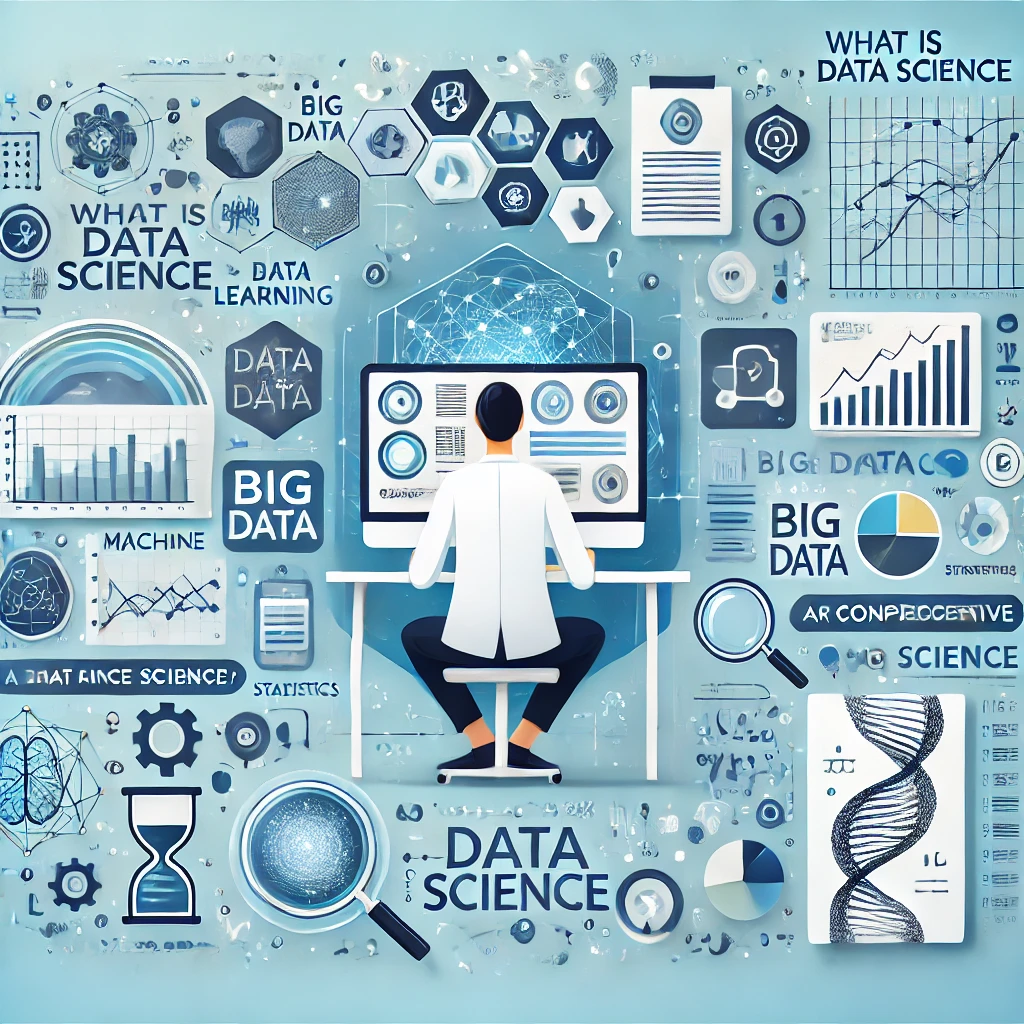
  • What is Data Science? A Comprehensive Guide for Beginners

    What is Data Science? A Comprehensive Guide for Beginners

    In the age of virtual transformation, Data Science has emerged as a vital field for solving complicated problems and using knowledgeable decision-making across industries. From predicting patron conduct to identifying trends in healthcare and finance, Data Science bridges the gap between uncooked information and actionable insights.

    What is Data Science?

    Data Science is an interdisciplinary field that uses statistical strategies, algorithms, programming, and area knowledge to extract valuable understanding and insights from based and unstructured facts. It combines concepts from Mathematics, Statistics, and Computer Science to investigate and interpret great amounts of facts.

    Core Components of Data Science

    1. Data Collection: Gathering data from numerous sources, which includes databases, APIs, IoT devices, and person logs.
    2. Data Cleaning: Preparing the statistics by way of handling lacking values, removing duplicates, and correcting inconsistencies.
    3. Exploratory Data Analysis (EDA): Analyzing facts styles, visualizing tendencies, and summarizing findings.
    4. Model Building: Using Machine Learning (ML) algorithms to predict outcomes or pick out hidden styles.
    5. Deployment: Implementing fashions and structures to provide real-time predictions and insights.

    Why is Data Science Important?

    The importance of Data Science lies in its potential to liberate hidden possibilities in information. By know-how developments, groups can:

    • Make records-pushed decisions
    • Enhance purchaser reviews
    • Improve operational efficiency
    • Drive revenue and innovation

    For instance, in eCommerce, Data Science enables recommend merchandise tailored to man or woman person alternatives, boosting sales and purchaser pride.

    Applications of Data Science

    Data Science is revolutionizing industries global. Here are a few distinguished applications:

    IndustryApplicationHealthcarePredicting ailment development the use of AI algorithms.FinanceFraud detection, credit score scoring, and algorithmic trading.RetailPersonalized product guidelines and inventory management.TransportationOptimizing shipping routes with actual-time data evaluation.EntertainmentStreaming systems recommending indicates or tune.

    Example Case Study: Netflix

    Netflix uses Data Science to investigate viewer conduct and choices. Their advanced algorithms advise suggests you’re probable to revel in, maintaining users engaged and dependable.

    Skills Required to Become a Data Scientist

    To excel in Data Science, individuals need a aggregate of technical and gentle abilties:

    1. Programming Languages: Python, R, SQL
    2. Statistics and Probability: Understanding distributions, hypothesis testing, and sampling
    3. Machine Learning: Algorithms like regression, choice bushes, and deep studying
    4. Data Visualization: Tools like Tableau, Power BI, or Matplotlib
    5. Communication Skills: Explaining insights to non-technical stakeholders

    Future of Data Science

    The demand for Data Scientists is skyrocketing, with agencies recognizing the value of records-pushed choice-making. According to current reviews, the Data Science industry is predicted to grow to $230 billion with the aid of 2026.

    Emerging tendencies include:

    • AI Integration: Combining Artificial Intelligence (AI) with Data Science for automation
    • Edge Computing: Real-time records processing at the edge of networks
    • Big Data: Handling large datasets the use of gear like Apache Spark and Hadoop

    Conclusion

    Data Science is reworking the way businesses function, providing remarkable opportunities for innovation and boom. As groups hold to harness the energy of records, the demand for skilled Data Scientists will handiest increase.

    If you’re thinking about a career on this interesting field, now’s the correct time to upskill, learn programming, and explore equipment that empower information-driven insights.

  • The Ultimate Guide to Digital Marketing: Strategies, Benefits, and Tools

    The Ultimate Guide to Digital Marketing: Strategies, Benefits, and Tools

    In present day fast-paced, Digital Marketing tech-driven international, businesses thrive on their capability to connect with their audience inside the digital space. Digital advertising has turn out to be the cornerstone of cutting-edge commercial enterprise techniques, assisting brands attain their target market, enhance engagement, and force conversions. But what exactly is virtual marketing, and how can it advantage your enterprise? Let’s dive into the necessities.

    What is Digital Marketing?

    Digital advertising refers to the usage of on line channels and digital technology to promote merchandise, services, or manufacturers. Unlike conventional marketing strategies which include TV, print, and billboards, virtual advertising operates inside the on line realm, leveraging systems like social media, web sites, search engines, and e mail.

    Key additives of digital advertising and marketing consist of:

    • Search Engine Optimization (search engine optimization): Enhancing your website to rank higher in search engine results.
    • Content Marketing: Creating and sharing treasured content to attract and preserve clients.
    • Social Media Marketing (SMM): Engaging along with your target market via systems like Facebook, Instagram, LinkedIn, and Twitter.
    • Email Marketing: Sending focused emails to nurture and convert leads.
    • Pay-Per-Click Advertising (PPC): Running paid campaigns on systems like Google Ads to force visitors and income.

    Benefits of Digital Marketing

    1. Global Reach
    2. Unlike traditional marketing techniques, virtual marketing allows corporations to extend their reach past geographical limitations. With a internet site, social media presence, or e-trade store, you could appeal to clients international.
    3. Cost-Effectiveness
    4. Digital advertising and marketing campaigns are often more low-cost than conventional marketing. You can tailor your finances and tune your return on funding (ROI) in real-time.
    5. Targeted Audience Engagement
    6. Tools like Google Ads and Facebook Ads allow you to goal precise demographics, pursuits, and behaviors, ensuring your message reaches the proper people.
    7. Measurable Results
    8. Analytics tools like Google Analytics offer insights into campaign overall performance, assisting you refine your strategies for higher results.
    9. Enhanced Customer Interaction
    10. Through social media and personalised electronic mail campaigns, digital marketing fosters stronger relationships with customers.

    Essential Strategies for Successful Digital Marketing

    1. Know Your Audience
    2. Conduct market studies to understand your target audience’s wishes, preferences, and pain points. Use gear like Google Trends and surveys to accumulate insights.
    3. Optimize for Search Engines
    4. search engine optimization is critical for riding organic traffic on your internet site. Focus on excessive-cost key phrases, create engaging content, and enhance your web page’s person revel in.
    5. Leverage Social Media
    6. Build a sturdy presence on systems in which your audience spends maximum of their time. Post regularly, engage with followers, and use analytics to music engagement.
    7. Invest in Paid Advertising
    8. PPC campaigns can provide instant consequences. Experiment with systems like Google Ads and Meta Ads to maximize visibility.
    9. Monitor and Adapt
    10. Use analytics tools to measure the performance of your campaigns. Be organized to alter strategies based on what works and what doesn’t.

    Top Digital Marketing Tools

    To streamline your efforts, do not forget the use of these famous gear:

    • Google Analytics: For monitoring website site visitors and person conduct.
    • Hootsuite: For coping with social media campaigns.
    • SEMrush: For SEO, key-word studies, and competitor analysis.
    • Mailchimp: For electronic mail advertising automation.
    • Canva: For creating visually appealing portraits and content.

    Future Trends in Digital Marketing

    The world of digital advertising is constantly evolving. Some trends to watch for include:

    • Artificial Intelligence (AI): AI equipment are enhancing personalization and automating routine tasks.
    • Voice Search Optimization: With the rise of smart speakers, optimizing for voice search is turning into critical.
    • Video Marketing: Platforms like YouTube, TikTok, and Instagram Reels are dominating customer engagement.
    • Sustainability Marketing: Brands promoting eco-friendly values are resonating with conscious consumers.

    Final Thoughts

    Digital marketing is no longer a luxury—it’s a need. Whether you’re a small business proprietor or a multinational organization, having a strong on line presence could make or break your achievement. By leveraging the right techniques and gear, you could construct meaningful relationships along with your target audience and obtain your business goals.

    Ready to take your business to the next degree? Start exploring the infinite possibilities of virtual marketing these days!

  • Understanding Data Science: The Power Behind the Digital World

    Understanding Data Science: The Power Behind the Digital World

    In today’s Data Science fast-paced digital era, data is being generated at an exponential rate. From customer transactions and social media activity to sensor data and online browsing behavior, the amount of information available is staggering. But, how do we make sense of all this data? This is where Data Science comes into play. It is the discipline that harnesses the power of data to uncover patterns, make predictions, and drive decision-making.

    What is Data Science?

    At its core, Data Science is the field that combines computer science, statistics, and domain expertise to extract actionable insights from large sets of data. It involves multiple techniques from machine learning, predictive modeling, data mining, and statistical analysis, applied to structured and unstructured data to solve complex problems.

    Unlike traditional data analysis, which focuses solely on interpreting data, encompasses the entire lifecycle of data, from collection and cleaning to analysis and interpretation. It empowers organizations to uncover trends, optimize processes, and make informed decisions that can significantly improve business outcomes.

    Key Components of Data Science

    Data Science is an umbrella term that covers a variety of fields, including:

    1. Data Collection and Cleaning: Raw data is often messy, incomplete, or inaccurate. The first step in any data science project is cleaning and preparing the data. This process involves removing duplicates, dealing with missing values, and converting data into a format suitable for analysis.
    2. Exploratory Data Analysis (EDA): This is the initial phase where data scientists perform a thorough analysis of the dataset to identify patterns, trends, and anomalies. Visualization tools like histograms, scatter plots, and box plots are often used to explore relationships between different variables.
    3. Statistical Analysis: Statistical methods help data scientists understand the relationships within data, identify distributions, and draw conclusions. This step often includes hypothesis testing, regression analysis, and correlation studies.
    4. Machine Learning and Predictive Modeling: Data Science heavily relies on machine learning (ML) algorithms that allow computers to learn from data and make predictions. Models like linear regression, decision trees, and neural networks are used to predict outcomes based on historical data.
    5. Data Visualization: Effective communication of insights is crucial. Data scientists use visualization techniques to present complex data in an easy-to-understand format, such as charts, graphs, and dashboards. Tools like Tableau, Power BI, and Python libraries (e.g., Matplotlib) are commonly used.

    Tools and Technologies Used in Data Science

    Data science is not limited to a particular set of tools, but it does rely on some common technologies:

    • Programming Languages: Python and R are the most popular programming languages in data science. Python’s simplicity and wide range of libraries, such as Pandas, NumPy, and Scikit-learn, make it a top choice for data scientists.
    • Databases: SQL and NoSQL databases, such as MySQL, PostgreSQL, MongoDB, and Hadoop, are essential for storing and retrieving data.
    • Cloud Platforms: Cloud computing platforms like AWS, Google Cloud, and Microsoft Azure provide the infrastructure and scalability needed for large data sets.
    • Big Data Technologies: Tools like Apache Hadoop and Spark are used to process and analyze large-scale data sets that cannot be handled by traditional data-processing methods.

    Applications of Data Science

    Data Science has a wide range of applications across industries. Here are a few examples:

    • Healthcare: In the medical field, data science is used to analyze patient data, predict disease outbreaks, and assist in personalized medicine. Machine learning algorithms help doctors diagnose diseases faster and more accurately.
    • Finance: In the financial industry, is applied to detect fraudulent activities, predict stock prices, and optimize trading strategies. Algorithms analyze historical data to assess risks and make investment decisions.
    • Retail and E-Commerce: Retailers use to personalize customer experiences, optimize inventory, and improve sales forecasting. Predictive analytics helps businesses anticipate customer needs and improve marketing strategies.
    • Transportation: powers autonomous vehicles, traffic management systems, and route optimization. It is used to predict traffic patterns, improve delivery efficiency, and enhance passenger experiences.

    The Future of Data Science

    As the volume of data continues to grow, so does the importance of data science. In the coming years, we can expect more innovations and advancements in fields like artificial intelligence (AI), deep learning, and neural networks. Automation of data cleaning, data analysis, and model creation will become more common, allowing data scientists to focus on more strategic tasks.

    Moreover, industries like manufacturing, education, and agriculture are starting to realize the potential of data science to drive efficiencies and improve operational effectiveness.

    How to Start a Career in Data Science

    For those looking to break into data science, here are some steps to get started:

    1. Educational Background: Most data scientists have a background in computer science, mathematics, or engineering. However, a degree in any field with a strong focus on analytical thinking and problem-solving can be useful.
    2. Learning Key Skills: Start by mastering the tools of the trade—Python, R, SQL, and machine learning frameworks. You can learn these skills through online courses, boot camps, or university programs.
    3. Work on Projects: Hands-on experience is essential. Build projects using real-world data and apply different analytical techniques to solve problems.
    4. Stay Updated: Data science is a rapidly evolving field. Follow blogs, attend conferences, and participate in online communities to stay up-to-date with the latest trends and technologies.

    Conclusion

    Data Science is a transformative field that is driving innovation across industries. It allows businesses to make data-driven decisions, optimize operations, and enhance customer experiences. Whether you are looking to become a data scientist or simply want to understand the impact of data science on the world around you, it’s clear that this discipline will continue to shape the future in profound ways.